One driver, one agency
The call rings at your agency and nowhere else. You are not racing other agencies to dial the same number.
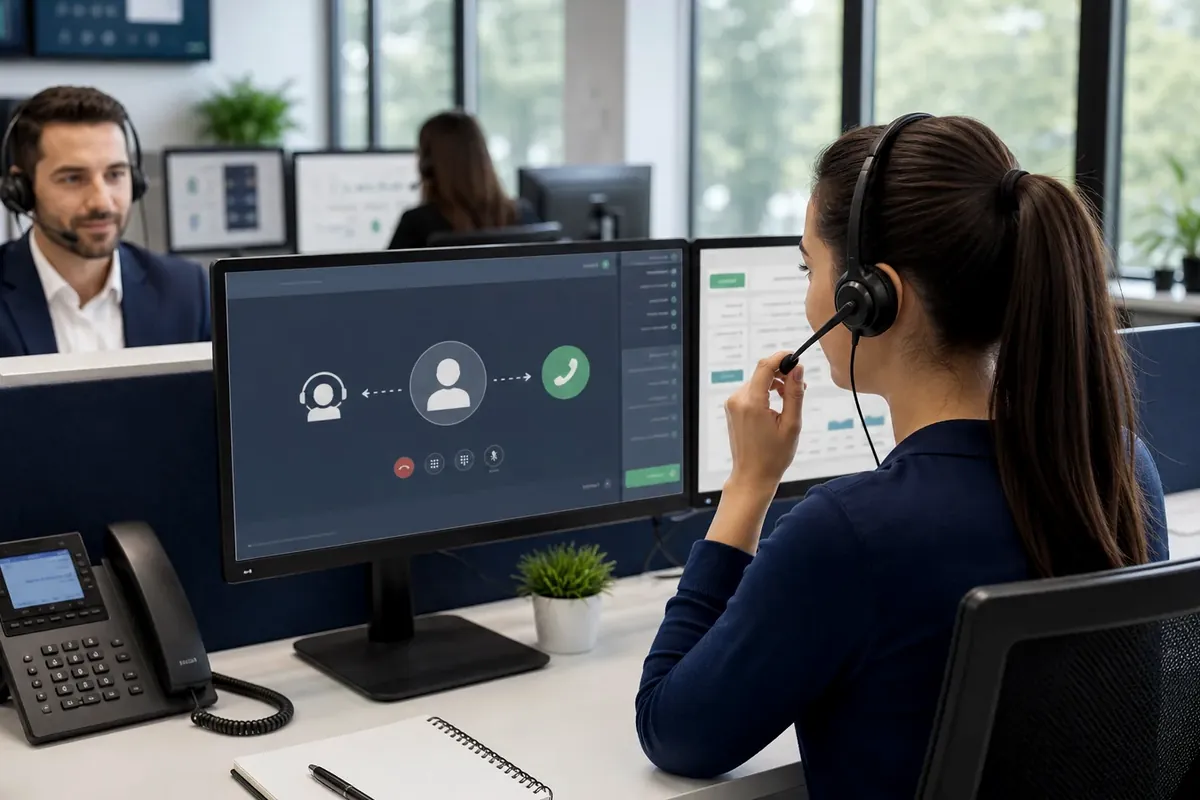
Our callers talk to car owners, find the ones who want an auto quote, and connect them to your producers while they are still on the phone. Renters with cars count too. You pay for each transfer that counts, never per dial or per hour.
Published · Updated
Our caller reaches a driver, confirms they want an auto quote, checks basic fit, and transfers them to your producer while they are still on the line. Each transfer goes to one agency, and you pay for each transfer that counts, never per dial or per hour.
Each auto transfer is one live driver who wants a price on their car insurance. Nobody else gets that call, and your producer takes it from hello.
The call rings at your agency and nowhere else. You are not racing other agencies to dial the same number.
A renter who owns a car is still an auto prospect. We transfer them too, so your auto volume does not depend on homeowners alone.
Pick the states you are licensed in. A driver who lives outside them can be sent back.
List the carriers you do not want to compete with in your campaign agreement. A driver already insured with one can be sent back.
An auto live transfer is one phone call that starts with our caller and ends with your producer. Here is what happens from the first dial to the recording in your portal.
We call from included calling data, or from your own lists if you add them. Numbers are scrubbed against do-not-call lists first, and calls only go out during allowed hours for the driver.
Following an approved script with the required disclosures, the caller confirms the driver wants an auto quote and checks basic fit for your campaign. The caller never quotes.
The transfer rings only at your agency. The clock starts at the first ring, and our screening time before that does not count.
Your producer greets the driver, gathers vehicles and drivers, and runs the quote. Price, coverage, and the policy are all your producer's job.
Every transfer appears in your portal the moment it connects, with a recording. Any charge on your balance points to that call.
If an answered call of 75 seconds to under 5 minutes matches an auto return reason, send it back through the portal. Our quality team reviews every return.
The caller's job is narrow on purpose. They confirm the driver wants an auto quote and is free to talk now, and they check the basics your campaign needs, such as having a car and living in one of your states.
They do not quote a price, compare carriers, give coverage advice, or bind anything. Those belong to your licensed producers. Screening is a first check. If a driver turns out to match a reason on the auto return list, you can send the call back.
When you buy auto insurance leads, you get a name, a phone number, and a few form details. Your team still has to reach the driver, and shared leads often go to several agencies at once. Live transfer auto insurance leads work the other way around. The driver is already on the phone with your producer and has already said they want a quote.
Leads can work when your producers have open time to dial and call back fast. Live transfers fit when they are busy and you want drivers on the phone without running the dialing. For a longer comparison, read aged vs. shared leads vs. live transfers.
An auto transfer is often more than one driver and one car. There may be a spouse, a teen with a new license, or a second vehicle in the driveway. What your producer asks in the first few minutes decides whether you quote one car or the whole household.
Ask how many vehicles the household has and who drives each one. Get the year, make, and model, or the VIN if it is handy. List every licensed driver with a date of birth. Leave one out now and you are re-quoting later.
Ask who insures them today, what limits they carry, and when the policy renews. Then ask if their coverage has lapsed. A driver with no auto insurance now, or a lapse in the past 6 months, is a valid return.
Ask about accidents, tickets, and claims in recent years. If the driver has or needs an SR-22, that is a valid return too. You are not stuck paying for a driver your carriers may not want to write.
Ask what made them want a quote today. A price jump at renewal, a new car, or a new driver in the house each points your producer toward a different conversation.
Auto shoppers compare prices fast. A driver who hangs up to wait for a callback may take the next quote that reaches them first. A live transfer closes that gap. Your producer can run the numbers, explain the coverage, and ask for the sale on the same call.
So keep a rater open and a producer free during the hours you set. If your team gets busy, lower how many calls you take at once. A driver who holds for 20 seconds or more and then hangs up is still billable, so a missed call still costs you.
Once the auto quote is running, ask about where they live. A homeowner can get a home quote on the same call, and a renter can add a renters policy. Either one gives the driver one more reason to move their business to you.
Auto live transfers fit P&C agencies that write auto and can keep a producer free during the hours they set. How you use them depends on how your agency is set up.
You can shop each driver across the carriers you write with. Pick your states, and name any carriers you do not want to compete with in your campaign agreement.
If you write for one carrier, check its rules on outside marketing vendors before you buy any leads or transfers. Once you are clear, the setup is the same: your states, hours, daily cap, and calls at once.
One producer can start. Take one call at a time with a daily cap your team can handle, then raise both as you add people.
Homeowners with cars can be quoted for both lines on one call. See how home and auto live transfer leads are billed.
Auto transfers follow the same billing rules as every other line. You prepay, your balance goes down only when a transfer counts, and each charge points to a specific call. Here is when an auto transfer counts.
Answered calls are timed from the first ring at your agency. Ringing counts. Our screening before the transfer does not.
Not billable.
Billable, unless our quality team approves a valid return.
Billable. No ordinary lead-quality returns.
This includes calls that ring through to your agency voicemail. The wait is timed from the first ring.
Not billable.
Billable while delivery is active and not paused. You get their details so you can call back.
Before you prepay, run your own numbers with the live transfer cost calculator, see what live transfers cost, and check any vendor against the billable live transfer checklist. The full rules, including pauses and your balance, are on our pricing page.
If your team answered and the call ran 75 seconds to under 5 minutes, you can return it for any of the 5 reasons on this list. Once an auto call passes 5 minutes, ordinary lead-quality returns no longer apply.
Not quoting the prospect is not, by itself, a reason to return a call. Read how returns are reviewed and settled
Not billable.
Billable, unless our quality team approves a valid return.
Billable. No ordinary lead-quality returns.
This is a plain-English summary. Your service agreement controls if anything here differs.
What agency owners ask most before they start taking auto calls from us.
Ask us about your agencyIt is a live phone call with a driver who wants an auto quote. Our caller reaches the driver, confirms they want a quote, checks basic fit, and transfers them to your producer while they are still on the line. Each transfer goes to one agency.
You pay a set price for each transfer, and we give you that price on a quote before you prepay anything. The price depends on the setup you ask for, such as your states, calling hours, and how many transfers you want a day. Answered calls under 75 seconds are never billed.
An auto insurance lead is usually a name, a phone number, and a few form details, and your team still has to reach the person. Shared leads often go to several agencies. A live transfer auto insurance lead is a driver already on the phone who wants a quote, so your producer can start quoting right away.
Mostly, yes. Lead vendors use both terms for a prospect who is handed to your producer on a live call. Some use warm transfer to mean the caller introduces the prospect before dropping off, so ask each vendor how its handoff works. At InsureScales, every transfer is live and goes to one agency.
An answered transfer becomes billable at 75 seconds, timed from the first ring at your agency, unless we approve a return. If nobody at your agency picks up and the driver holds for 20 seconds or more before hanging up, that call counts too while your delivery is active, and you get the driver's details to call back.
Yes. If the driver has or needs an SR-22, you can send back an answered transfer that lasted 75 seconds to under 5 minutes. Our quality team reviews every return, and only approved returns come off your bill.
Yes. A renter who owns a car and wants an auto quote is an auto prospect, so we transfer them too. Your producer can also offer a renters policy before the call ends.
Yes. You choose your states, calling hours, daily cap, and how many calls you take at once. Carriers you want to avoid go in your campaign agreement, and a driver already insured with one of them can be sent back.
Many carriers have rules about outside marketing vendors, so check your carrier's rules before you start. If your carrier allows it, the setup is the same as for an independent agency: your states, calling hours, daily cap, and calls at once.
No. Our callers never quote, bind, or give advice. They find drivers who want a quote and pass them to your licensed producers, who run the numbers and write the policy.
Live transfers delivered
Agencies served
States covered
As of October 2026
Tell us the states where you write auto, the hours your producers can take calls, and how many drivers you want a day. You get a price per transfer before you prepay.
Get a quote